Ambient occlusion adds contact shading rather than replacing all the lighting
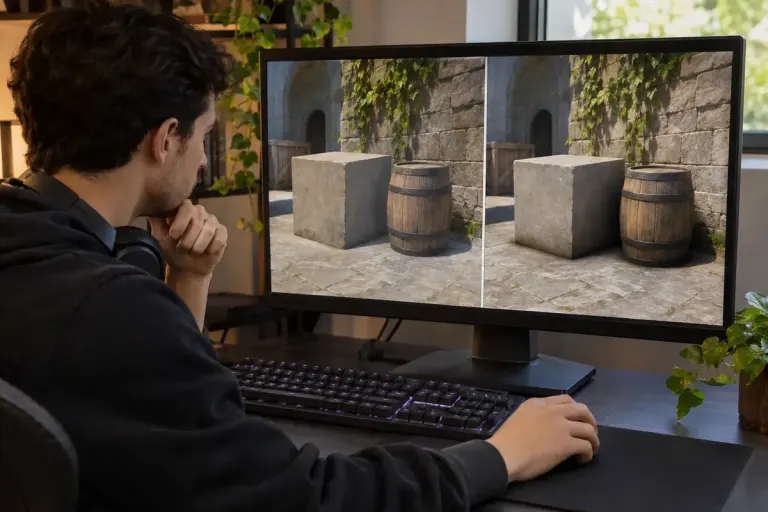
Ambient occlusion adds shading around creases and nearby objects. Compare it in a stable scene without confusing it with every shadow or lighting effect.
Ambient occlusion adds shading around creases and nearby objects. Compare it in a stable scene without confusing it with every shadow or lighting effect.
Low-framerate compensation repeats frames to keep a display inside its variable-refresh range. Understand what that does—and what it cannot add.

Temporal anti-aliasing uses information across frames. Learn why it can soften jagged edges yet leave ghosting, and how to compare settings fairly.

Dynamic resolution can change a game’s internal render size without changing your monitor. Learn what to compare when judging image quality and performance.

VSync links frame presentation to the display refresh. Compare tearing, responsiveness and steadiness before deciding which setting works for your game.

See what anisotropic filtering changes on angled surfaces and test its visual benefit without confusing it with resolution or antialiasing.

Test a frame-rate limit against a repeatable game scene and judge consistency as well as the highest FPS number.