
Display and Performance
Alpha-to-coverage gives cutout textures another route to smoother edges
Alpha-to-coverage uses multisample coverage to soften cutout edges such as foliage. Learn what it changes and why it is not ordinary transparency.

Understand the setting. Enjoy the session.
Alpha-to-coverage uses multisample coverage to soften cutout edges such as foliage. Learn what it changes and why it is not ordinary transparency.
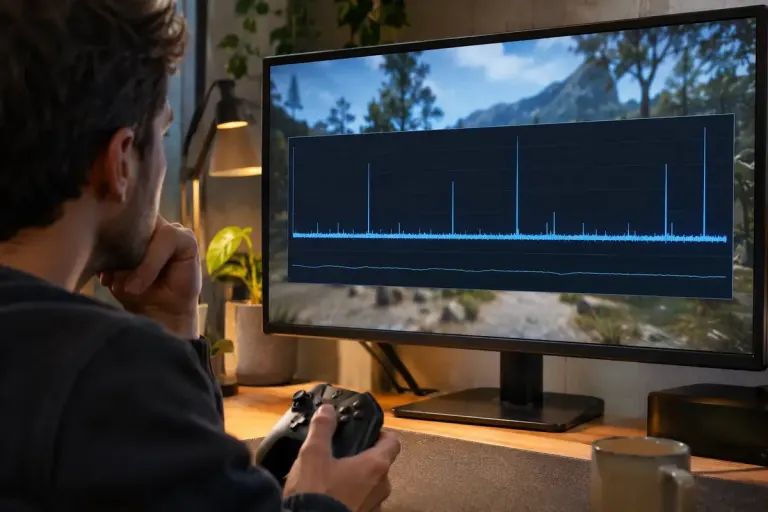
Average FPS can hide uneven frame delivery. Learn what frame pacing reveals and how to compare settings without losing track of the test conditions.

Fixed and eye-tracked foveated rendering distribute detail differently in VR. Learn what the setting changes and how to judge it in an actual game.
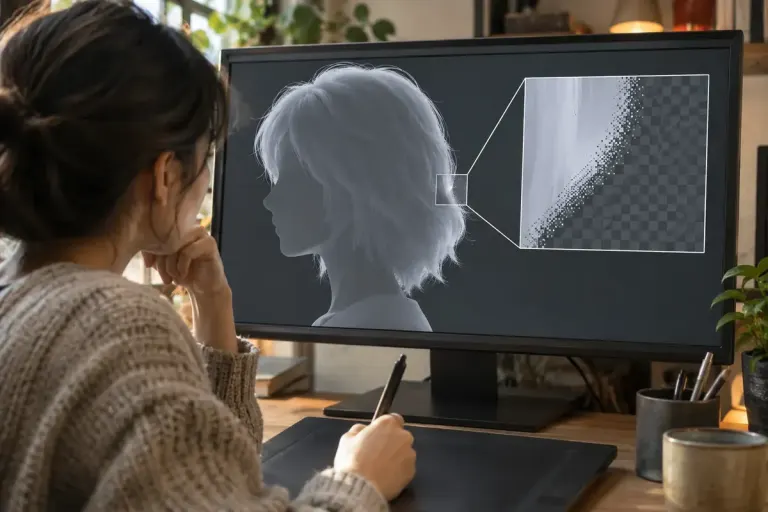
Speckled hair or fading objects can come from dithered transparency. Learn why temporal anti-aliasing can smooth the pattern and why motion may reveal it.
Real-time ray tracing uses limited samples, so denoising helps build the final image. Look for motion and fine detail when comparing graphics settings.
Sampler feedback records texture sampling information for a renderer. Learn how it can support streaming and why hardware support alone does not improve every game.
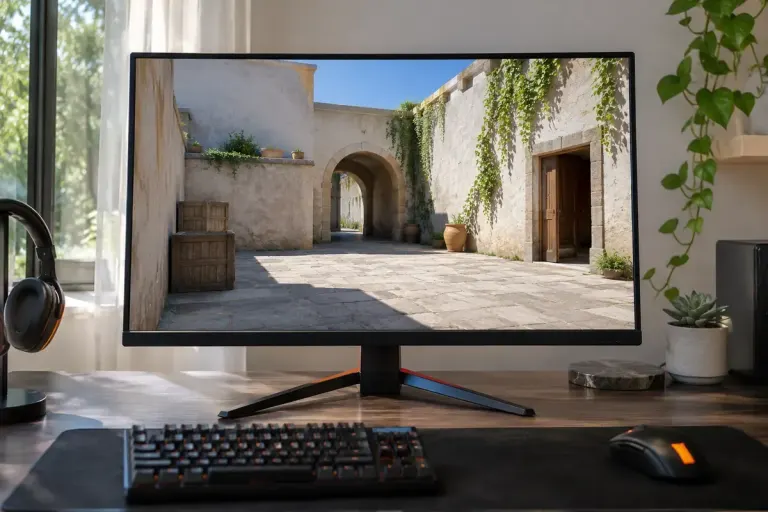
Occlusion culling reduces rendering work for hidden objects. Learn how it differs from the camera’s view boundary and why a game may still simulate what you cannot see.
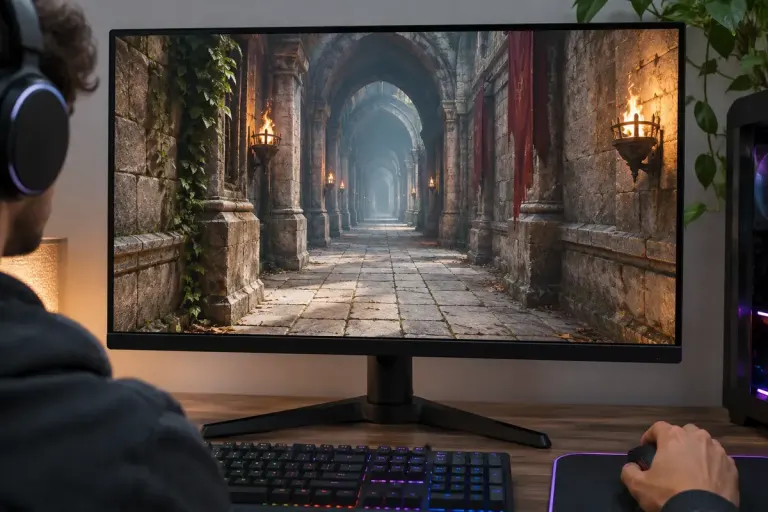
Learn how trilinear filtering blends between mipmap levels and how to compare its effect while keeping other game graphics settings unchanged.

Variable rate shading changes where a game spends shading work. Learn how it differs from lowering resolution and how to compare the result.