
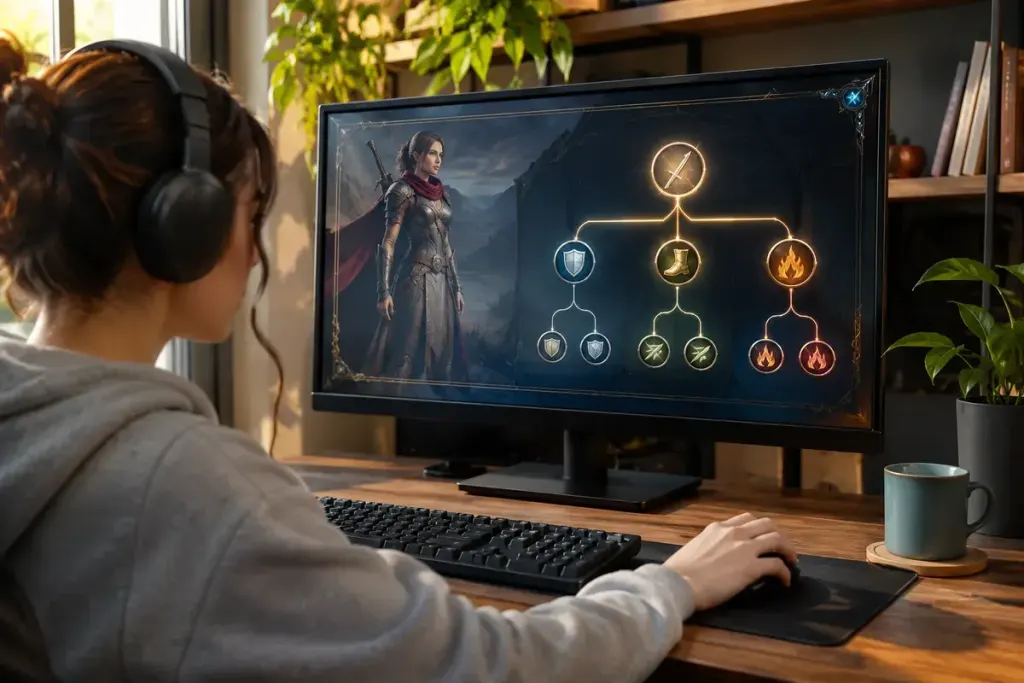
Losing a run does not always mean returning to the same starting point. In a roguelite, the character may return to a hub while some resources, options or story developments remain. The useful question is exactly what survives.
Sort progress into three boxes
First is the run build: the equipment, temporary bonuses and combinations assembled during that attempt. Second is persistent progression: changes the game retains across attempts. Third is player knowledge: recognising an enemy’s cue or understanding a risky route. The last category exists even when the game records no upgrade at all.
Supergiant’s Hades FAQ discusses permanent progression systems and difficulty options alongside the game’s action. It also acknowledges the flexible use of “rogue-like” and “rogue-lite.” A store tag alone is therefore a poor specification of how a particular game handles failure.
An unlock is not always a power increase
Imagine a fictional game where one completed challenge adds a new starting weapon. That provides another choice, but it does not necessarily make every future attempt stronger. Compare it with an upgrade that increases a baseline statistic. Both persist; their effect on play differs.
When reading a review, look for concrete descriptions: what resets, which resources remain, whether narrative events continue, and whether new options are alternatives or direct improvements. These details tell you more about the rhythm of play than an argument about the genre label.
Decide what makes an attempt worthwhile to you
If you enjoy learning a demanding encounter, knowledge may be enough progress. If you prefer visible accumulation, persistent unlocks may matter more. Neither preference is a failure to understand the genre.
Before buying, use the developer’s description and a spoiler-light review to check how a typical unsuccessful attempt ends. Also distinguish saving mid-run from saving permanent progress: those are separate features. A game can preserve long-term upgrades while offering limited ways to pause an individual run.
That small distinction helps set expectations. You are choosing a particular relationship between repetition, learning and retention—not simply whether a game is “hard” or “forgiving.”