
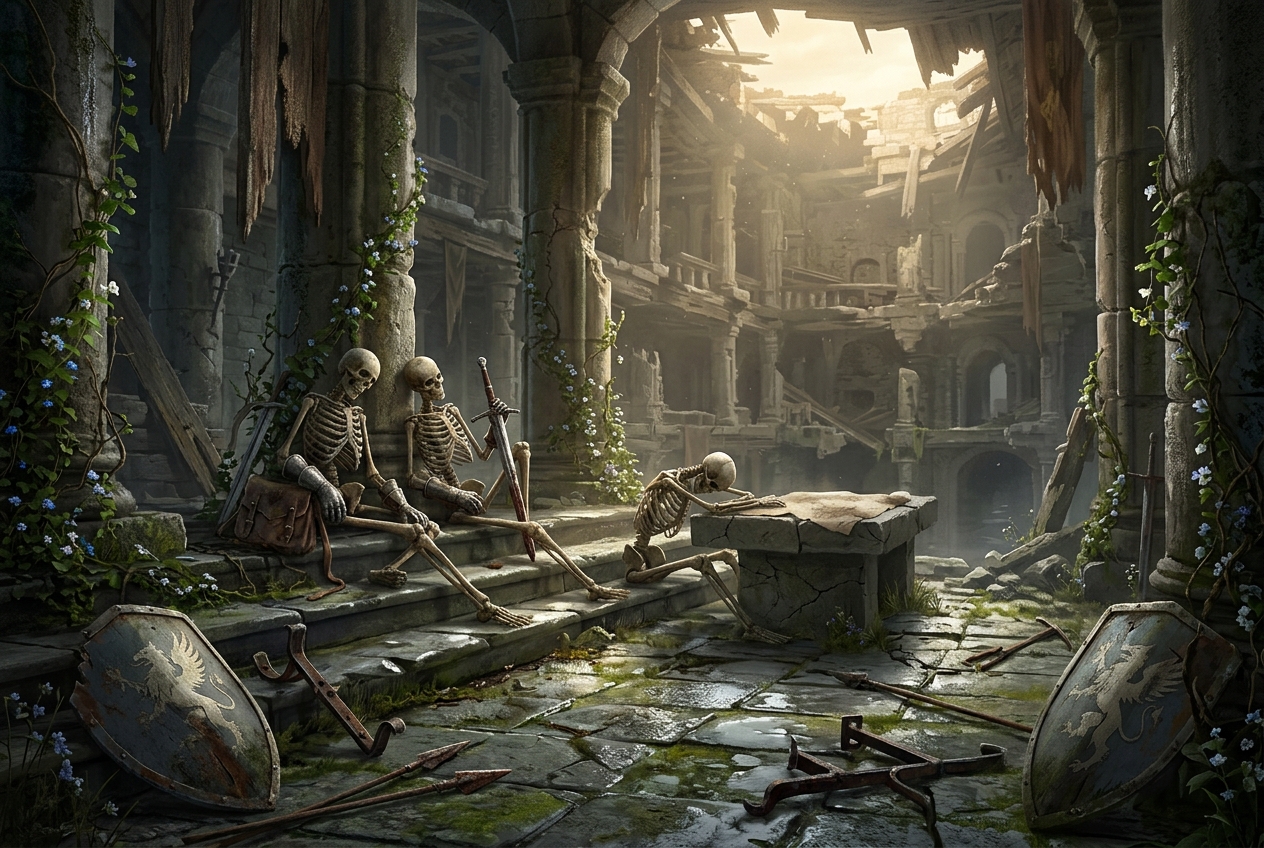
Great video games do far more than simply tell a linear story through dialogue and scripted cutscenes. The most unforgettable role-playing experiences build complex, living worlds where history breathes through every stone, weapon, and abandoned ruin.
When game developers master implicit storytelling, the environment itself becomes a quiet narrator. Players who stop to observe their surroundings unlock ancient histories, unspoken tragedies, and forgotten myths that lie just beneath the surface of the main questline.
The Art of Environmental Narrative Design
Environmental storytelling relies on placing deliberate clues within a game world to imply narrative without relying on spoken dialogue. Rather than overwhelming players with dense text walls, world designers construct visual puzzles that reward careful observation.
A single ruined campsite can tell a complete, heartbreaking story if designed with care. Two skeletons clutching each other beside a shattered shield tell a story of desperation and final comfort without a single word being spoken or written.
Visual Clues and Subtle World Building
Visual cues force players to become active detectives rather than passive consumers of a narrative. When you wander into a cavern and notice claw marks gouged deeply into stone walls, your mind instantly constructs a sense of impending danger.
This subtle approach to immersive world building transforms routine exploration into a continuous journey of discovery. Every bloodstain, misplaced artifact, and collapsed archway offers a fragment of history waiting to be pieced together.
Cryptic Item Descriptions and Historical Artifacts
Fragmented storytelling often extends directly into a game’s inventory system. Weapons, armor pieces, and ring descriptions frequently hold vital clues about long-dead civilizations and legendary heroes.
By piecing together cryptic text snippets found across hundreds of collectible items, curious adventurers can unravel the true backstory of a fallen kingdom. This technique allows developers to embed rich fantasy RPG lore directly into the core gameplay loop without interrupting action sequences.
Unearthing Forgotten Histories in Iconic RPG Worlds
The most celebrated fantasy worlds excel at layering centuries of historical conflict into their landscapes. From crumbling mountain fortresses to overgrown subterranean ruins, these environments reflect the passage of time and the rise and fall of empires.
Exploring these spaces feels authentic because the architecture tells a logical story of cultural expansion, tragic warfare, and catastrophic magic.
Architecture as Living History
Architectural styles within a fantasy universe reveal who built a structure, why it was constructed, and how it was eventually destroyed. Monstrous strongholds built over ancient elf ruins show layers of conquest and cultural erasure.
Noticing how different building materials overlap allows observant players to trace historical eras naturally. This level of detail elevates standard level design into a masterclass in video game storytelling that rewards patient environmental analysis.
Micro-Stories Scattered Across Open Landscapes
Beyond grand historical arcs, open-world fantasy titles excel at scattering tiny, self-contained micro-stories across their vast wildernesses. A lone sword resting on a mountaintop grave or a overturned carriage surrounded by burnt arrows tells an immediate, personal tale.
These small environmental vignettes make vast virtual worlds feel inhabited by real people with their own struggles. Stumbling across these moments makes world exploration deeply rewarding, encouraging players to stray far off the beaten path.
Why Uncovering Hidden Secrets Deepens Player Immersion
The human brain naturally craves mystery and closure. When a game grants players agency to piece together hidden lore on their own terms, ownership over the narrative shifts directly to the player.
This sense of personal discovery creates a far deeper emotional connection than any mandatory cinematic sequence ever could.
Rewarding Curiosity and Observation
When developers hide rich backstories behind difficult puzzles or obscure geographical locations, finding them feels like a major personal achievement. Players are no longer just following waypoint markers; they are actively deciphering a living world.
Uncovering well-hidden environmental details yields a unique thrill that mechanics alone cannot provide. Players who take the time to inspect strange rock formations or search behind waterfalls are frequently rewarded with hidden gaming secrets that completely recontextualize the overarching plot.
Fostering Community Speculation and Lore Analysis
Implicit storytelling rarely gives all the answers away, leaving intentional gaps in historical timelines and character motivations. These narrative voids spark passionate debates among fans, giving rise to dedicated theory-crafting communities.
When players gather online to analyze cryptic dialogue lines, item placement, and environmental clues, the narrative extends far beyond the screen. This collective detective work transforms solitary gaming experiences into shared cultural phenomena that endure for decades.
The Emotional Weight of Unspoken Tragedies
Some of the most haunting moments in fantasy role-playing games involve environmental tragedies that the player arrives too late to stop. Finding an abandoned cellar filled with preserved food and children’s toys tells a quiet story of sudden flight or tragic demise.
Because these scenes require players to draw their own conclusions, the resulting emotional impact is often far more poignant than a scripted death scene.
Creating Atmospheric Tension Through Environmental Decay
Decaying environments naturally evoke feelings of nostalgia, melancholy, and tension. Wandering through magnificent throne rooms covered in cobwebs and moss forces players to contemplate the fleeting nature of power and human ambition.
By carefully tuning lighting, ambient soundscapes, and ruin placement, designers cultivate an oppressive or tragic atmosphere. Utilizing sophisticated environmental narrative design techniques allows environments to manipulate player emotions dynamically as they venture deeper into uncharted territory.
The Role of Environmental Storytelling in Future RPGs
As graphics engines become more realistic and game worlds continue to expand, the sophistication of environmental narrative design will only increase. Dynamic physics systems, realistic weather patterns, and highly detailed asset placement allow developers to craft subtle visual narratives with unprecedented precision.
Future titles will likely rely even more heavily on player agency and environmental clues, moving away from intrusive quest logs and mechanical hand-holding. Unlocking deep video game lore through pure organic exploration will remain the ultimate benchmark for exceptional world design.
By treating the environment as a central character rather than a mere backdrop, modern fantasy RPGs create immersive digital realms that linger in our memories long after the credits roll.